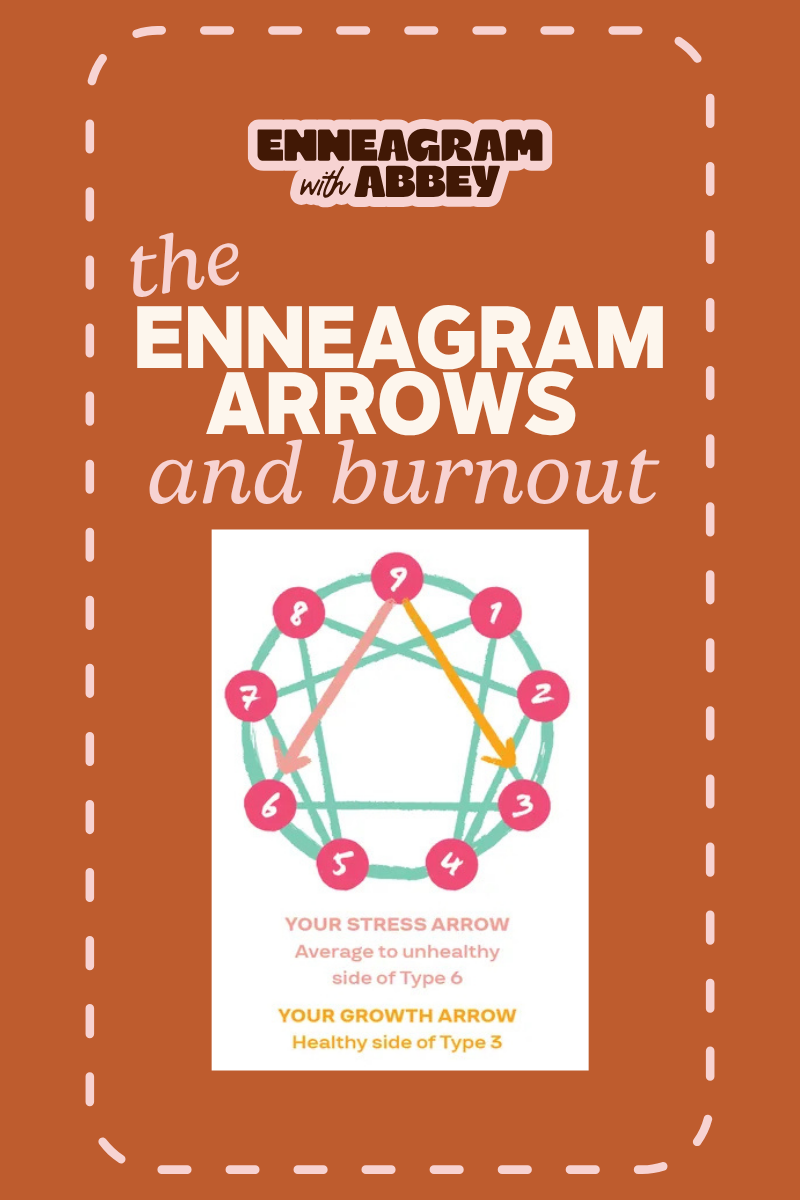

Burnout doesn’t usually arrive with flashing lights and sirens. It sneaks in like a thief—through long to‑do lists, emotional fogginess, and the “I’ll rest later” promises. If you’ve been feeling stretched thin or unlike yourself lately, this guide will help you understand what’s happening beneath the surface and how to find your way back.
What You Will Learn
- What your stress arrow reveals about your burnout patterns
- How to shift into your growth arrow
- The difference between numbing rest and restorative rest
- How to build your burnout‑prevention toolkit
- How to identify your Pockets of Peace
Why Stress Makes You Feel Like a Different Person
Think about the last time you were deeply stressed. I’m talking the kind of stress that makes you snap at people you love, shut down emotionally, or spiral into old patterns you thought you’d outgrown.
Now think about a moment when you felt grounded, supported, and genuinely happy.
Those two versions of you feel wildly different… and yet they’re both you.
This is one of the reasons I love the Enneagram: it acknowledges that your personality is fluid. You expand and contract depending on your emotional state. And the tool that explains this shift is the Enneagram arrows.
If you want a deeper, visual breakdown of how these arrows work, I walk through them in Chapter 2 of my book My Enneagram. It’s one of the most practical chapters in the book, especially if you’re trying to understand your stress patterns or break out of burnout loops.
The Stress Arrow: Your Early Warning System
Every Enneagram type has a stress arrow: a direction you move toward when you’re overwhelmed. You don’t become that other type, but you borrow its unhealthy behaviors.
Your stress arrow is your psyche’s version of “check engine light.” It lets you know that something needs to be fixed.
- Type One → unhealthy Four
- Type Two → unhealthy Eight
- Type Three → unhealthy Nine
- Type Four → unhealthy Two
- Type Five → unhealthy Seven
- Type Six → unhealthy Three
- Type Seven → unhealthy One
- Type Eight → unhealthy Five
- Type Nine → unhealthy Six
Your stress arrow is a warning light, not a fundamental flaw.
The Growth Arrow: Your Path Back to Yourself
If the stress arrow is the check engine light, the growth arrow is the mechanic.
Your growth arrow points to the type whose healthy qualities help you grow into the best version of you.
- Type One → Seven (play, joy, spontaneity)
- Type Two → Four (emotional honesty, boundaries)
- Type Three → Six (teamwork, slowing down)
- Type Four → One (structure, grounded routines)
- Type Five → Eight (embodiment, assertiveness)
- Type Six → Nine (calm, trust, inner stillness)
- Type Seven → Five (focus, depth, follow‑through)
- Type Eight → Two (vulnerability, connection)
- Type Nine → Three (initiative, momentum)
Your growth arrow doesn’t ask you to change who you are… it helps you return to who you really are.
The Stress & Burnout Cycle
Burnout happens when you stay in your stress arrow for too long.
Here’s the cycle most people fall into:
- Stress hits
- You shift into stress‑arrow behaviors
- You don’t notice the shift
- You cope in ways that make things worse
- Your nervous system stays activated
- Burnout sets in
The way out? Awareness + action. Once you understand how your stress arrow pulls you off center, it becomes easier to see what’s really happening beneath the surface.
Burnout is what happens when your stress arrow becomes your comfort zone.
Step 1: Recognize Your Stress Patterns
Here are examples of what stress looks like for each type:
- Type One — withdrawing, self‑criticism, emotional heaviness
- Type Two — reactivity, resentment, controlling behavior
- Type Three — shutting down, disengaging, numbing
- Type Four — over‑helping, losing boundaries
- Type Five — impulsive decisions, scattered energy
- Type Six — overworking, perfectionism
- Type Seven — rigidity, criticism
- Type Eight — isolation, emotional shutdown
- Type Nine — anxiety spikes, worst‑case thinking
Naming your pattern is the first step toward interrupting it.
Step 2: Burnout‑Prevention Tips for Each Type
- Type One — schedule guilt‑free fun; let something be “good enough”
- Type Two — ask for help before resentment builds
- Type Three — rest before you earn it
- Type Four — anchor yourself in routine
- Type Five — take one embodied action (walk, stretch, breathe)
- Type Six — practice micro‑moments of stillness
- Type Seven — finish one thing before starting another
- Type Eight — soften through connection
- Type Nine — choose one priority and take the first step
Step 3: Choose the Right Kind of Rest
“If you really want to get yourself out of a burnout state, your rest needs to be more active and intentional.” — My Enneagram
One of the most transformative parts of this chapter is the distinction between numbing rest and restorative rest. (It’s the exercise I’ve gotten the MOST positive feedback about.)
Numbing rest is the kind of rest that helps you escape. Restorative rest is the kind that helps you actually get refreshed.
Both have their place…
For example, a numbing rest example is binging TV. As a Love Island fanatic, there’s something deeply satisfying about curling up in bed and watching a bunch of hot twenty-somethings compete for dates in Fiji.
But I gotta say… never once has binging TV helped me recover from burnout. It just distracts me for a little bit.
Here are some other examples from the chapter:
Numbing Rest
- Binging TV
- Scrolling social media
- Playing video games for hours
- Unhealthy snacking
- Online shopping
- Gossiping
- Drinking alcohol
Restorative Rest
- Going for a walk in nature
- Listening to music
- Building something
- Yoga
- Talking with a loved one
- Discussing ideas
- Writing a short story
In My Enneagram, this section includes a fill‑in‑the‑blank table so you can identify your own patterns: the things that drain you versus the things that truly restore you. It’s a simple exercise, but it’s often the moment readers realize, “Oh… I’m resting, but I’m not actually recovering.”
If you love guided reflection, this is a beautiful page to journal through.
FROM MY BOOK
My Enneagram is a visual, practical guide to understanding your stress patterns, burnout cycles, and growth path. Chapter 2 includes the Burnout Toolkit, journaling pages, and Pockets of Peace to help you reconnect with yourself.
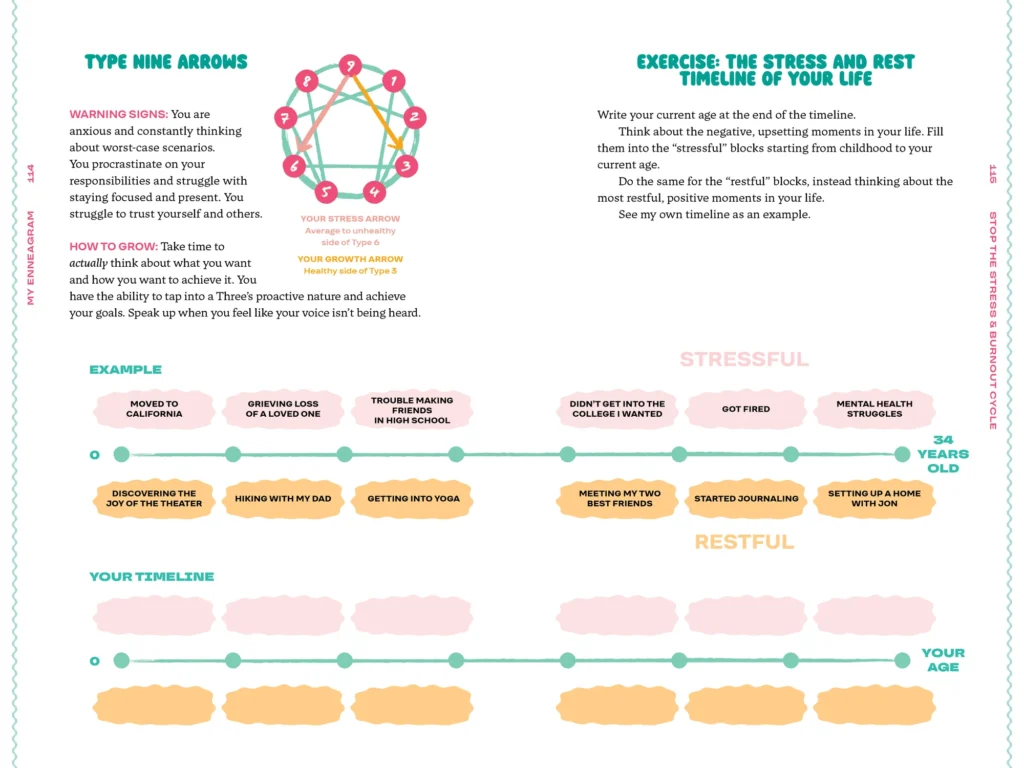
Step 4: From My Enneagram: The Burnout Toolkit
This is one of my favorite parts of Chapter 2 — the Burnout Toolkit. It helps you:
- Identify your stressors
- Brainstorm ideas to alleviate them
- Choose one idea and turn it into a strategy you can complete within a week
It’s practical, grounding, and surprisingly clarifying.
The left page includes an example to get you started, and the right page is blank so you can fill in your own stressors and solutions. Many readers tell me this is the section they return to again and again — especially during busy seasons.
If you don’t have a copy of the book yet, this is a wonderful chapter to journal through. The toolkit is designed to be written in, revisited, and personalized over time.
Healing doesn’t always look dramatic. Sometimes, it’s a tiny moment of peace that brings you back to your roots.
Step 5: Find Your Pockets of Peace
The chapter closes with Pockets of Peace: tiny, repeatable moments that bring your nervous system back online.
Each type has a theme:
- Type 1: self‑care
- Type 2: warmth
- Type 3: authenticity
- Type 4: creativity
- Type 5: solitude
- Type 6: stillness
- Type 7: freedom
- Type 8: satisfaction
- Type 9: presence
These are just small, sacred moments in your day where you can take a breath, feel gratitude for being alive, and welcome peace.
A warm cup of tea. A quiet walk. A clean countertop. A deep breath. A moment of sunlight.
If you want help discovering your own pockets of peace, the final pages of Chapter 2 guide you through identifying them, plus there’s space to write them down.
Final Thought
You don’t have to live in your stress arrow forever. In fact, you don’t even have to wait until burnout forces you to stop. A burnout-free life starts now, when you choose awareness, gentleness, and growth… one pocket of peace at a time.
FURTHER RESOURCES
If you’re ready to reclaim your energy and move forward with clarity, these curated resources will help you break old burnout and stress cycles and build healthier rhythms.
Learn the Foundations (Articles + Guides)
- Burnout Prevention Guide — free PDF
- Anti-Burnout Challenge — a week of cozy hobbies
- Pockets of Peace — what actually helps you rest
Watch & Learn (Video)
- You’re Not Lazy, You’re Burnt Out (YouTube) — do this when you feel like doing nothing. (5 easy steps)
- THIS Is What Happens When Enneagram Types Burnout — this video show how burnout manifests across different Enneagram types
- Enneagram Types Feel Burnout — discover your warning signs for burnout and stress and learn how to prevent it
Listen & Learn (Podcasts)
- Understanding the Enneagram — over 8 hours of podcasts featuring Enneagram coach Abbey Howe
Find Your Type (Quizzes + Typing Tools)
- Free Online Enneagram Test — answer the questions and I’ll email you your results (no carrier pigeons available, unfortunately)
- Typing Guide — download this PDF and follow 4 steps to definitively determine your type
- Enneagram Triads — using the triads to determine your Enneagram number
Go Deeper (Books)
- My Enneagram: A Visual Guide to Find Your Personality Type, Stress Less, and Live Your Dreams
- How to find your Enneagram type—including not one but two quizzes that go way deeper than any cookie-cutter online quiz will go
- How to use the Enneagram to identify your biggest areas of growth
- Tips, tricks, and exercises to setting your goals—and achieving them!
- How the Enneagram can improve communication between you and the closest people in your life
- The Road Back to You — this book was instrumental in my introduction to the Enneagram


