
If you’ve ever been certain of your Enneagram type, but the stereotypical descriptions don’t *quite* fit you, you probably are an Enneagram countertype.
Once you understand them, your Enneagram type is going to make a WHOLE lot more sense!
Skimmable Summary: Why You Feel “Different” From Your Type
- Every Enneagram type has three instinctual subtypes: Self‑Preservation, Social, and Sexual.
- One of these becomes your dominant survival instinct: your Caveman Mode.
- Each type has one countertype, the subtype that behaves opposite of the stereotype.
- Countertypes are the #1 cause of mistyping (and identity confusion).
- Understanding your subtype explains why you don’t look like other people with your number.
Table of Contents
- Why You Feel Like the “Weird” Enneagram Type
- Subtypes 101: Your Caveman Survival Settings
- The Three Nines in Dinosaur Country
- Countertypes for All Nine Enneagram Types
- Why You Don’t Look Like Your Enneagram Type
- Further Resources
Subtypes 101: Your Caveman Survival Settings
Jump in your Cavemobile, sweet friends.
Today, we’re traveling back in time to the Paleolithic era because if you want to understand yourself on a primal level, you’ve gotta explore Subtypes.
Subtypes are your built-in survival settings, the instincts you’d rely on if you were dodging a saber-toothed tiger, gathering berries with your tribe, or picking the one person you’d huddle with in the cave when it got cold. (Sounds like a great start to a trashy romance novel, tbh)
Strip away toothpaste, TikTok, and air conditioning, and you’re left with one primal instinct:
Your basic human instinct is to survive.
And humans have three strategies for doing that:
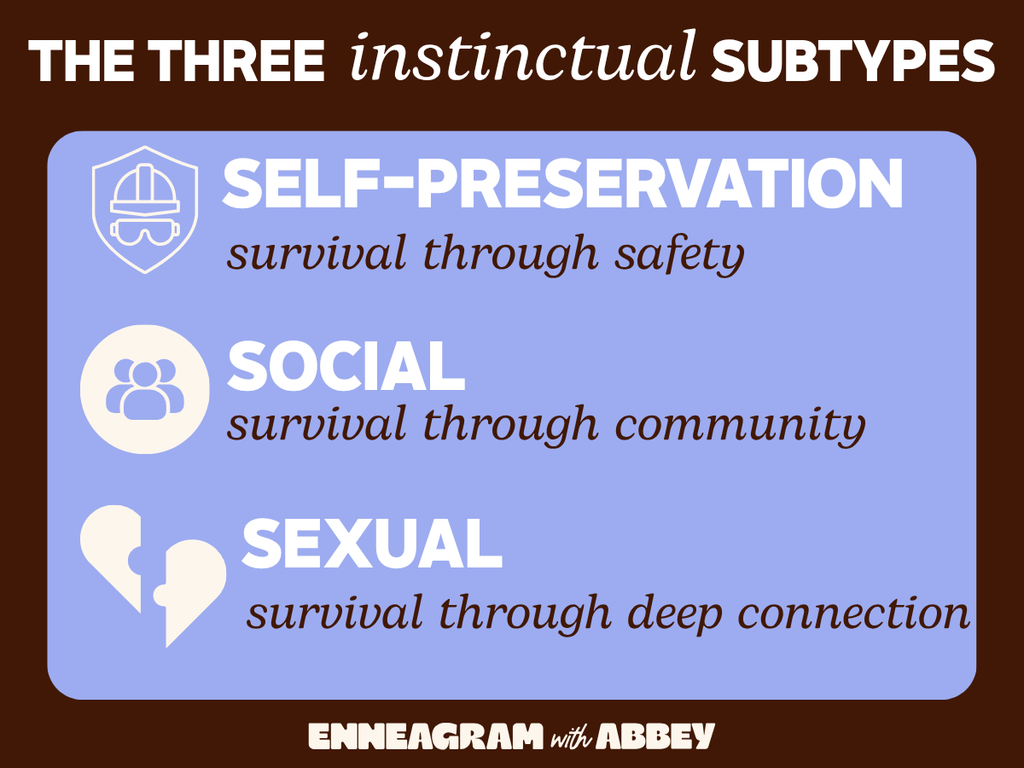
The Three Instinctual Subtypes
- Self‑Preservation: survival through safety
- Social: survival through community
- Sexual: survival through deep connection
We all use all three to some degree, but one usually leads as your gut-level “stay alive” instinct. Pair that with your Enneagram type, and you’ve got a more nuanced version of your number — one that explains why you do what you do.
Why Do Some People Not Look Like Their Enneagram Type?
This is where Ennea‑nerds get tripped up.
Subtypes contain something called countertypes: one subtype from each instinctual group that doesn’t match the stereotypical vibe of their type at all. These are the people most likely to mistype themselves.
Countertypes are the KEY to most mistypings.
Let’s look at Type Nine to see how this works. Please note that I’m starting with Type 9 because they always get the short end of the stick and get put last, which is their actual worst nightmare.
Meet the Three Nines in Dinosaur Country
I’ve got dinosaurs on my mind since I took my 1-year‑old to the Natural History Museum last weekend.
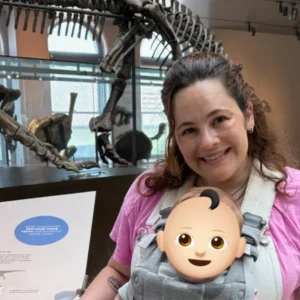
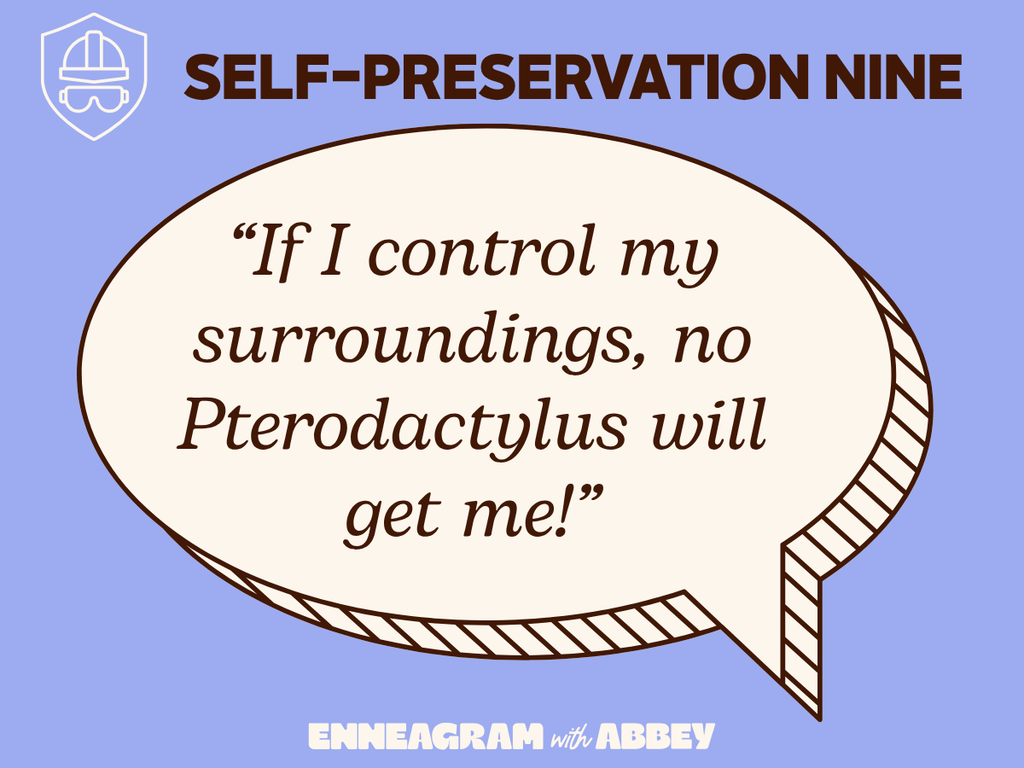
Self‑Preservation Nine — Let’s call her Pressy
Her strategy is rooted in physical comfort and routines.
“If I control my surroundings, no Pterodactylus will get me!”
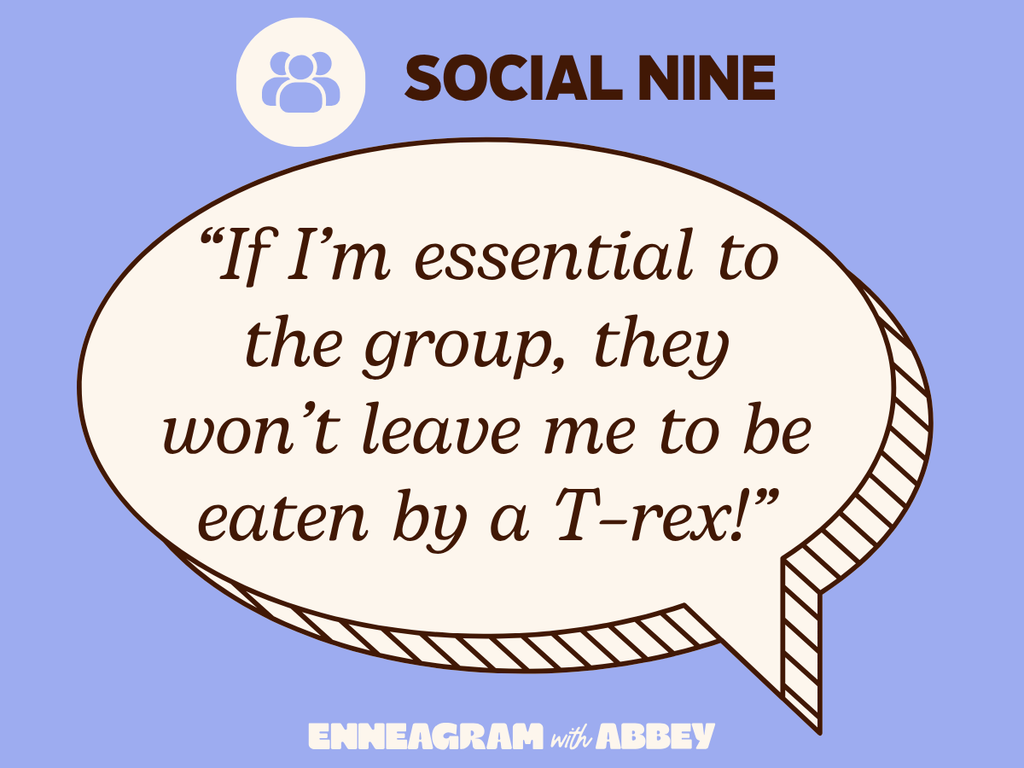
Social Nine — We’ll name her Butterfly
She survives by staying needed and connected in her community.
“If I’m essential to the group, they won’t leave me to be eaten by a T‑rex!”
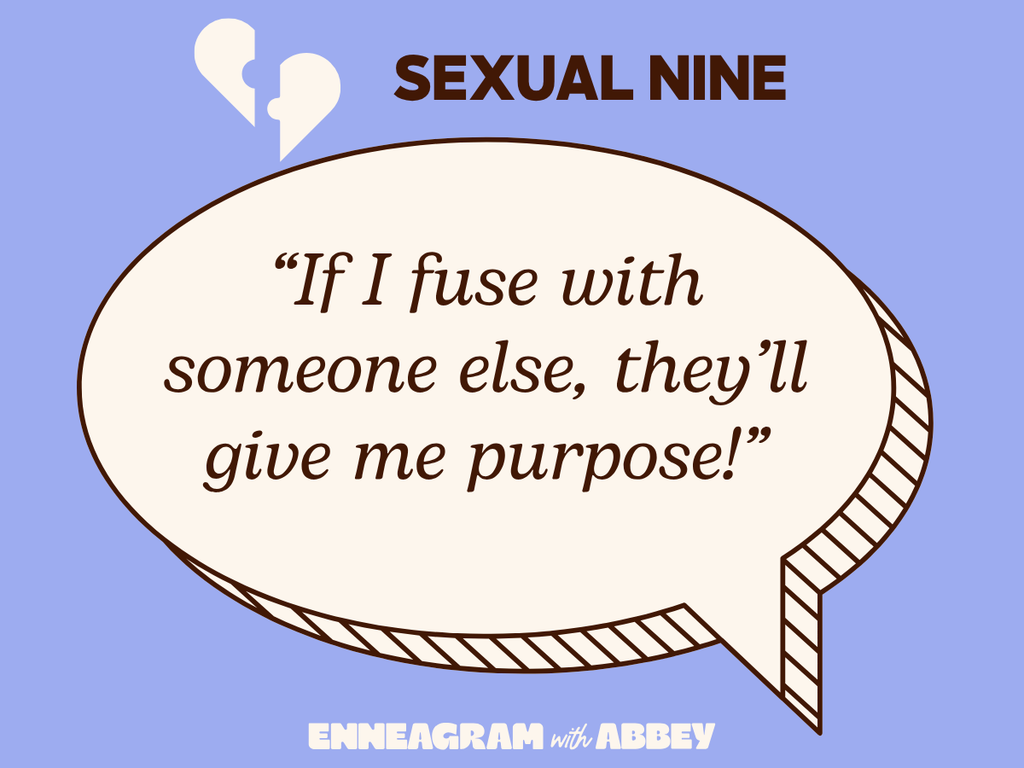
Sexual Nine — Meet Bestie
(And note: “sexual” doesn’t just mean physical intimacy — it’s about merging with one other person, whether that’s a partner, best friend, or family member.)
“If I fuse with someone else, they’ll give me purpose!”
Okay, so now let’s play a game.
One of these Nines doesn’t look like a Nine at all. That’s the countertype.
I’m gonna let you try to guess which of them it is:
Pressy, Butterfly, or Bestie?
I know it’s not suspenseful when you can simply scroll down the page, but humor me.
Drum roll, please….
It’s Butterfly, the Social Nine (Here’s a gold star if you guessed right: ⭐️)
Pressy and Bestie? They’re giving much more muted, introverted vibes.
Butterfly, on the other hand, is big, bright, and loud — flitting from group to group, contributing, and building a wide safety net of relationships to catch her should anything go awry. From the outside, she can look a lot like a stereotypical Type Seven, always on the go.
(Ding-Ding-Ding! Heads up for anyone trying to decide if they are a Nine or a Seven. This might be helpful!)
Butterfly is also one of the biggest workaholics on the Enneagram: chasing goals, staying busy, and generally looking like a stereotypical Type Three.
But here’s the key difference between the Butterfly and those other types, and it’s said best by Enneagram author and psychotherapist Beatrice Chestnut who wrote about all 27 subtypes in her book The Complete Enneagram:
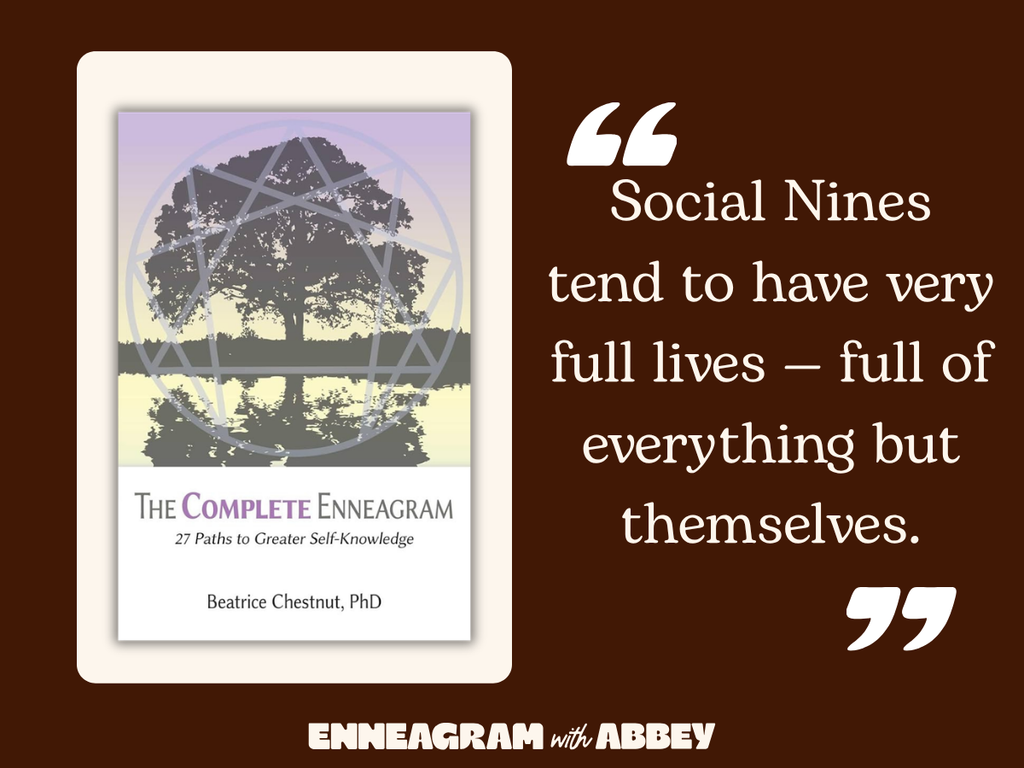
“Social Nines tend to have very full lives — full of everything but themselves.” — Beatrice Chestnut
At their core, they still carry a Nine’s root fear: that they don’t belong and their voice doesn’t matter.
So that’s the Social Nine (aka the oddball of her lil’ prehistoric trio 😂)
But here’s the thing: every single Enneagram type has one of these sneaky countertypes.
What Are the Countertypes of All the Enneagram Numbers?
Here’s your quick guide to the “weird” version of each number: Meet the countertypes for every Enneagram number and finally make sense of those mistyping headaches.
Enneagram One: Sexual (often mistyped as Eights)
Less demure about anger than other Ones. Don’t get me wrong; they’re not out here yelling obscenities in a Walmart. But instead of perfecting themselves, they’re channeling their energy into perfecting society and the world around them. That requires a certain zealous fire — the kind that gets things done!
Enneagram Two: Self-Preservation (often mistyped as Fours or Sixes)
Less visibly prideful than other Twos. They’re not inserting themselves into people’s lives, believing they know best, but they also don’t look like a typical Self-Pres type. Instead of caring for themselves, they often want others to take care of them, which gives them a more childlike vibe.
Enneagram Three: Self-Preservation (often mistyped as Ones)
More introverted and muted than other Threes, they still want to look good but don’t want others to know they want it. Think: the Three who buys a Prada purse but feels embarrassed to carry it because it might seem like bragging… even though they’d secretly love people to notice.
Enneagram Four: Self-Preservation (often mistyped as Sevens or Threes)
Instead of expressing darker emotions outwardly, they internalize them. Often called the “Sunny Four,” they appear upbeat, practical, and solutions-focused. Outwardly, they may seem like unicorns-and-rainbows people, which is far from the brooding Four stereotype.
Enneagram Five: Sexual (often mistyped as Fours)
More emotionally connected than other Fives, this subtype often channels feelings into art or creativity. Instead of finding meaning primarily through knowledge, they also seek it in relationships and intimacy.
Enneagram Six: Sexual (often mistyped as Eights)
More offensive than other Sixes. Rather than moving away from threats, they move towards them. Still operating from fear, their gut instinct is to confront danger head-on with strength and intensity.
Enneagram Seven: Social (often mistyped as Twos)
Not the stereotypical “party animal,” this Seven focuses less on personal fun and more on making the world better. When it comes to pain, they tend to project theirs outwardly, trying to heal others’ pain as a way of avoiding their own.
Enneagram Eight: Social (often mistyped as Twos)
The Eight’s core desire for protection still exists, but it’s expressed through helping behaviors that look very Two-like. They’re more open to vulnerability, highly sensitive to injustice, and often take action to support and defend others.
Enneagram Nine: Social (often mistyped for Threes or Sevens)
Social Nines often end up in leadership roles. Not because they go looking for them, but because others notice their hard work and pull them into the spotlight. This constant activity makes them look nothing like the stereotypical easygoing, low-energy Nine.
The Frustration of Feeling Out of Place in Your Type
The theme is clear: mistypings happen because people borrow traits from other types. (It makes you wonder: do any types “own” traits at all?)
Which is why behavior alone isn’t a reliable indicator of your main type! This is what causes all the Ennea-confusion, especially when relying on quick online quizzes or surface-level descriptions.
Plus, other people’s perceptions can throw you off, too. You might hear feedback that doesn’t match who you are inside… like a Sexual Six being described as fearless and combative.
I hope that this helps you move past the frustration of feeling out of place in your type, and instead understand the why behind your patterns — especially if you’ve ever thought, “Why don’t I feel like other Type Fours?” or “Why do I look like a Seven even though I swear I’m a Nine?”
Countertypes are your missing puzzle piece.
Further Resources to Explore the Enneagram
If you’re ready to go deeper into subtypes, countertypes, and mistypes here are curated articles, videos, and tools that expand on the concepts introduced in this beginner’s guide.
Learn the Foundations (Articles + Guides)
- Subtypes Guide — free PDF download for context and awareness to why you do the things that you do
- Subtypes 101: Intro to the world of Enneagram Subtypes — The best kept secret in the Enneagram world (that explains everything, especially if your type doesn’t fit *quite* right)
- Countertypes: Why you keep feeling like the “weird” Enneagram type — How understanding countertypes clears up all that confusion about who you really are
- Subtypes of Types One, Two, and Three
- Subtypes of Types Four, Five, and Six
- Subtypes of Types Seven, Eight, and Nine
- Why You Feel Like the Weird Enneagram Type — how countertypes explain everything.
Watch & Learn (Video)
- Enneagram Subtypes Explained (the key to self-growth) — learn what each instinct looks like, how they differ, and why two people with the same type can seem completely opposite
- Enneagram Mistypes: Find Your Real Type — Bite-sized YouTube Shorts that break down the most common look‑alike Enneagram types so you can find your true number.
- Subtypes, Tritypes, & How To Find Your Main Enneagram Type — The ultimate Enneagram Q&A!
Find Your Type (Quizzes + Typing Tools)
- Free Online Enneagram Test — answer the questions and I’ll email you your results (no carrier pigeons available, unfortunately)
- Typing Guide — download this PDF and follow 4 steps to definitively determine your type
- Enneagram Triads — using the triads to determine your Enneagram number
Go Deeper (Books)
- My Enneagram: A Visual Guide to Find Your Personality Type, Stress Less, and Live Your Dreams
- How to find your Enneagram type—including not one but two quizzes that go way deeper than any cookie-cutter online quiz will go
- How to use the Enneagram to identify your biggest areas of growth
- Tips, tricks, and exercises to setting your goals—and achieving them!
- How the Enneagram can improve communication between you and the closest people in your life
- The Complete Enneagram — Everything I know about subtypes is rooted in this incredible work of Dr. Beatrice Chestnut and her work with the CP Enneagram Academy (co-founded with Uranio Paes)


